Connect With Us
Blog
Items filtered by date: August 2024
Tuesday, 27 August 2024 00:00
Weighing the Benefits and Drawbacks of Hiking in Flip Flops
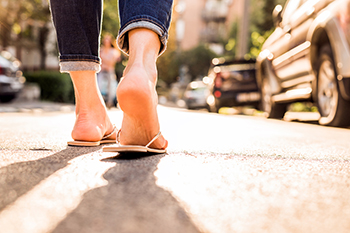
Hiking in flip-flops offers some benefits, such as breathability and convenience, making them a quick choice for casual, short walks. They are easy to slip on and off, which can be practical in warm climates. However, the drawbacks far outweigh these benefits. Flip flops provide minimal support and cushioning, leading to increased risk of foot strain and injuries. They offer little protection from sharp rocks, uneven terrain, or potential hazards like insects. The lack of a secure fit can result in slips and falls, especially on rugged or slippery trails. If you enjoy hiking while wearing flip-flops and have endured a foot injury, it is suggested that you contact a podiatrist who can treat various foot conditions.
Flip-flops are not always the best choice of footwear. If you have any concerns about your feet or ankles, contact one of our podiatrists from Advanced Foot & Ankle. Our doctors will assist you with all of your foot and ankle needs.
Flip-Flops and Feet
When the weather starts warming up, people enjoy wearing flip-flops. Flip-flops are comfortable, stylish, and easy to slip on and off; they're perfect for any summer beach goer. However, these shoes can cause harm to the feet.
How Can Flip-Flops Affect Me Long-Term?
- Ankle problems
- Hip problems
- Lower back problems
- Pain in the balls of the feet
- Problems with foot arches
- Changes in the way you walk
Are There Injuries Associated with Flip-Flops?
Yes. Since flip-flops are relatively weak and do not provide the same amount of support as sneakers, people who wear flip-flops regularly are more susceptible to injuries. On top of that, the open nature of the shoe makes your feet more prone to other problems, such as cuts and even infections. Common injuries and ailments include:
- Sprained ankles
- Blisters
- Infections
- Cuts and Scrapes
I like Wearing Flip-Flops. Are There Safe Alternatives?
When buying flip-flops, try to find ones that have sturdy soles and that are made of high-quality materials that will support for your feet. These flip-flops will cost more but will also last longer as a result.
If you have any questions please feel free to contact our offices located in Newburg and Taylorsville, KY . We offer the newest diagnostic and treatment technologies for all your foot and ankle needs.
Tuesday, 20 August 2024 00:00
Fall Prevention Techniques

Preventing falls both at work and in the home is vital for safety and well-being. In the workplace, maintaining a clean, clutter-free environment and ensuring that all walkways are well-lit can significantly reduce fall risks. Employees should be encouraged to use proper footwear with slip-resistant soles and to secure any loose cables or cords. At home, keeping floors tidy and free from obstacles is essential. Use non-slip mats in bathrooms and secure rugs to prevent slipping. Ensure adequate lighting in hallways and staircases to improve visibility. Installing handrails on stairs and in bathrooms can provide additional support. Additionally, regularly checking and repairing any worn or uneven flooring can also help prevent accidents. Various foot and ankle injuries can happen from falling. If this applies to you, it is suggested that you visit a podiatrist who can effectively treat these types of ailments, and guide you on additional fall prevention techniques.
Preventing falls among the elderly is very important. If you are older and have fallen or fear that you are prone to falling, consult with one of our podiatrists from Advanced Foot & Ankle. Our doctors will assess your condition and provide you with quality advice and care.
Every 11 seconds, an elderly American is being treated in an emergency room for a fall related injury. Falls are the leading cause of head and hip injuries for those 65 and older. Due to decreases in strength, balance, senses, and lack of awareness, elderly persons are very susceptible to falling. Thankfully, there are a number of things older persons can do to prevent falls.
How to Prevent Falls
Some effective methods that older persons can do to prevent falls include:
- Enrolling in strength and balance exercise program to increase balance and strength
- Periodically having your sight and hearing checked
- Discuss any medications you have with a doctor to see if it increases the risk of falling
- Clearing the house of falling hazards and installing devices like grab bars and railings
- Utilizing a walker or cane
- Wearing shoes that provide good support and cushioning
- Talking to family members about falling and increasing awareness
Falling can be a traumatic and embarrassing experience for elderly persons; this can make them less willing to leave the house, and less willing to talk to someone about their fears of falling. Doing such things, however, will increase the likelihood of tripping or losing one’s balance. Knowing the causes of falling and how to prevent them is the best way to mitigate the risk of serious injury.
If you have any questions, please feel free to contact our offices located in Newburg and Taylorsville, KY . We offer the newest diagnostic and treatment technologies for all your foot care needs.
Sunday, 18 August 2024 00:00
Stop Your Toenail Fungus
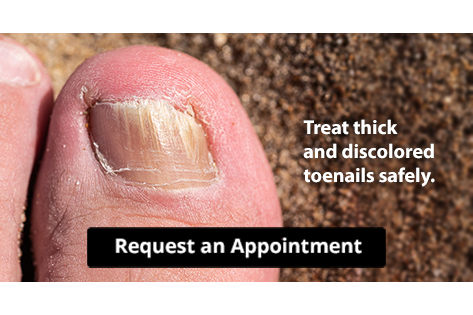
Have you noticed discoloration of your toenails? Have they become thickened or brittle? If so, you may be experiencing symptoms of a fungal nail infection. For some, having a fungal nail can be embarrassing. Overcome your embarrassment, and get treated.
Tuesday, 13 August 2024 00:00
Osteoarthritis of the Ankle
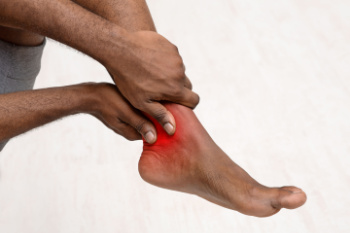 Ankle osteoarthritis is a relatively uncommon condition often arising years after an ankle injury that damages the cartilage. Unlike other forms of arthritis, it tends to affect younger individuals, especially those with a history of trauma to the joint. Excess weight can worsen the condition by increasing stress on the ankle and accelerating cartilage deterioration. Symptoms of ankle osteoarthritis include pain, stiffness, and swelling in the joint, which can increase with activity and improve with rest. Patients may also experience a reduced range of motion and a feeling of instability in the ankle. Diagnosis typically involves a physical examination, patient history, and imaging tests, such as X-rays or MRI scans, to assess cartilage damage and joint space narrowing. Treatment focuses on managing symptoms and improving joint function. Conservative approaches include weight management, targeted stretching exercises, anti-inflammatory medications, and orthotics. In severe cases, surgical options like ankle arthroscopy, fusion, or joint replacement may be considered to alleviate pain and restore mobility. If you have persistent ankle pain, it is suggested that you schedule an appointment with a podiatrist for a proper diagnosis and treatment.
Arthritis can be a difficult condition to live with. If you are seeking treatment, contact one of our podiatrists from Advanced Foot & Ankle. Our doctors can provide the care you need to keep you pain-free and on your feet.
Arthritic Foot Care
Arthritis is a joint disorder that involves the inflammation of different joints in your body, such as those in your feet. Arthritis is often caused by a degenerative joint disease and causes mild to severe pain in all affected areas. In addition to this, swelling and stiffness in the affected joints can also be a common symptom of arthritis.
In many cases, wearing ill-fitting shoes can worsen the effects and pain of arthritis. Wearing shoes that have a lower heel and extra room can help your feet feel more comfortable. In cases of rheumatoid arthritis, the arch in your foot may become problematic. Buying shoes with proper arch support that contour to your feet can help immensely.
Alleviating Arthritic Pain
- Exercises that stretch the foot can prevent further pain and injury and increase mobility
- Most of the pain can be alleviated with anti-inflammatory drugs, heat, and topical medications
- Massages can help temporarily alleviate pain.
It is best to see your doctor for the treatment that is right for your needs and symptoms. Conditions vary, and a podiatrist can help you determine the right method of care for your feet.
If you have any questions, please feel free to contact our offices located in Newburg and Taylorsville, KY . We offer the newest diagnostic tools and technology to treat your foot and ankle needs.
Tuesday, 06 August 2024 00:00
How Runners Manage Broken Toes
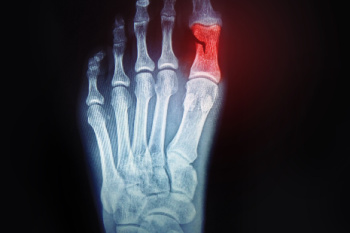 Broken toes, common among runners, often result from stubbing the toe, dropping a heavy object on the foot, or repetitive stress from intense running. Symptoms include immediate pain, swelling, bruising, and difficulty walking or wearing shoes. For runners, broken toes can significantly impact training and performance. The injury requires prompt attention to prevent complications. Initial treatment involves rest, compression, and elevation. Buddy taping, where the injured toe is taped to an adjacent toe, provides support and stabilization. Wearing stiff-soled or supportive shoes can protect the toe during the healing process. If you have broken your toe, it is suggested that you consult a podiatrist for a proper diagnosis and treatment. This foot doctor can recommend appropriate footwear, exercises for maintaining foot strength, and a safe return-to-running plan to ensure a complete recovery.
A broken toe can be very painful and lead to complications if not properly fixed. If you have any concerns about your feet, contact one of our podiatrists from Advanced Foot & Ankle. Our doctors will treat your foot and ankle needs.
What to Know About a Broken Toe
Although most people try to avoid foot trauma such as banging, stubbing, or dropping heavy objects on their feet, the unfortunate fact is that it is a common occurrence. Given the fact that toes are positioned in front of the feet, they typically sustain the brunt of such trauma. When trauma occurs to a toe, the result can be a painful break (fracture).
Symptoms of a Broken Toe
- Throbbing pain
- Swelling
- Bruising on the skin and toenail
- The inability to move the toe
- Toe appears crooked or disfigured
- Tingling or numbness in the toe
Generally, it is best to stay off of the injured toe with the affected foot elevated.
Severe toe fractures may be treated with a splint, cast, and in some cases, minor surgery. Due to its position and the pressure it endures with daily activity, future complications can occur if the big toe is not properly treated.
If you have any questions please feel free to contact our offices located in Newburg and Taylorsville, KY . We offer the newest diagnostic and treatment technologies for all your foot and ankle needs.
